28/06/2016


A la suite de démarches pressantes de sir Douglas Haig, le commandant en chef britannique en France, et, à l'entrée en lice d'Albatros D I et D II en grand nombre, le Triplane fit l'objet de commandes du RFC et du RNAS, mais en fait, il ne servit de façon régulière que dans les unités du RNAS.


14/06/2016
Fokker V.4
Fokker F.1
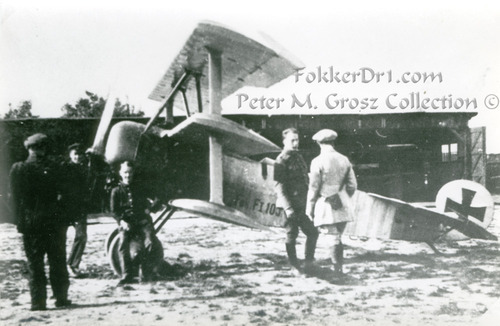
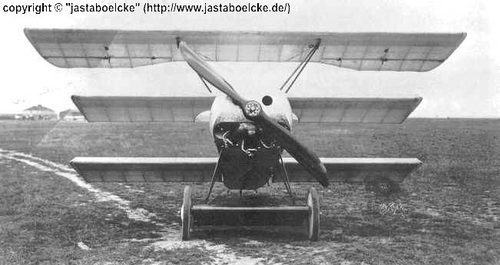
Bien que le V.4 se soit avéré être difficile à piloter, la poursuite du développement de l'avion a abouti au modèle F.1 avec plus de succès. Les ailes en porte à faux de la version V.4 ont été jugées trop souples, aussi les ailes ont été calées pour permettre un meilleur contrôle en vol. Ce fut le dernier prototype avant la Dr.1 surnommé l’infâme combattant. Avec trois ailes légèrement décalées, et une petite aile entre le train d'atterrissage, l'avion était incroyablement similaire au Dr.1 qui a suivi. Bien que seulement trois aient été produits, ils ont été testé en combat en 1917 sur la Belgique par Manfred von Richthofen, qui a marqué sa 60e victoire aérienne avec cet avion.
Fokker V.6
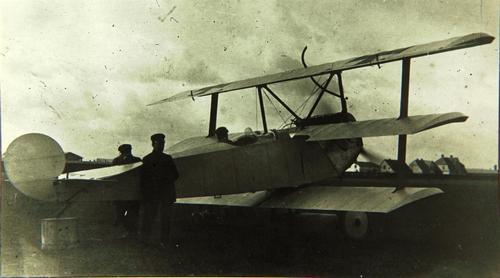
Le modèle V.6 était un autre triplan prototype développé par Fokker. Il présentait un moteur plus puissant et plus lourd, ce qui a nécessité l'usage de plus grandes ailes. Comme le F.1, il avait des entretoises montées entre les plans pour réduire la flexion des ailes, mais bizarrement, l'aile inférieure a été placée légèrement en dessous du fuselage plutôt que "collée" au fuselage. Cependant, le test ont vite montré les inconvénients de ce montage, et des carénages ont été ajoutés pour combler ce vide. Alors que les essais de la F.1 continuaient, le Dr.1 est entré en service, et le modèle V.6 a été abandonné en Octobre 1917, car il s'est avéré moins manœuvrant que le Dr.1.
Fokker V.8
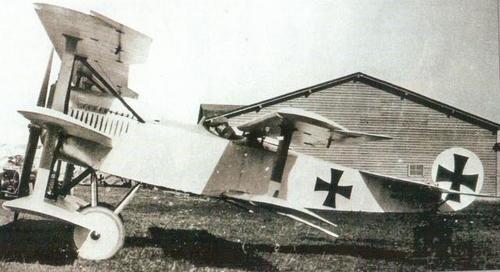
- Deux rangées d'ailes, avec trois ailes à l'avant et deux ailes dans la partie médiane de l'aéronef. Les volets sur les ailes avant agissaient comme des ailerons, tandis que les volets sur les ailes arrière travaillaient de concert avec la queue pour l'ascension. Vraisemblablement parce que représentait une idée arriérée, dépassée, personne ne voulait le faire voler, Anthony Fokker dût en être le pilote d'essai. Après deux vols très courts, Fokker décida de l'abandonner. Reinhold Platz, l'ingénieur qui avait pour mission de développer l'avion, détestait parler de cet avion et estimait qu'il était une source d'embarras.
06/06/2016
Albatros Dr.I
Découvert sur le site http://kplanes.tumblr.com, d'un passionné d'avions et d'aéronautique, ces projets d'avions triplan développés par la société Albatroswerke pour l'armée allemande, sur une base d'Albatros.
En réponse à l'arrivée sur le front du Sopwith triplane anglais.
Ce modèle DR1 était une conversion du modèle D.V. sur lequel étaient montés les 3 plans.
Les 3 ailes sont de taille égale, les ailes inférieures et supérieures sont montés décalées du fuselage, alors que l'aile centrale l'est quasiment au centre du fuselage.
Testé mi 1917, les tests ne montraient malheureusement aucune amélioration des performances de l'avion d'origine. Le projet fut abandonné.


05/06/2016
Un nouveau vaisseau "Ugly fighter" de pirate et de contrebandier.
peinture en cours, il manque quelques rehauts de couleur, un travail plus détaillé sur le cockpit, plus tard, pour l'ensemble des vaisseaux pirates, un "logo" définissant leur appartenance...


30/05/2016


26/05/2016
Il faut un début à tous, alors, voici son premier vaisseau X-Wings classique, à ses couleurs...


En cours de finition, un vaisseau pirate de type Z-'ceptor.
Assemblage de différents vaisseaux, utilisé par les pirates et contrebandiers de l'espace...
En cours de finition, il manque encore le nez, et est en cours de peinture, juste une sous couche, un fond bleu et un "wash" bleu.
La suite, prochainement.


07/05/2016

“Chewie, we’re home.”
–Han Solo

Finn supports the Resistance as a crew upgrade. And the galaxy’s greatest pilot Poe Dameron can now fly to battle as Black One, sitting in the cockpit of his signature black T-70 X-wing.

It’s still true to form, but also has the small, key details that tie it into the recent movie. It helps tell the tail of what the ship has been through over the years between Return of the Jedi and The Force Awakens.

The Heroes of the Resistance Expansion for X-Wing will hit the retail shelves in the third quarter of 2016.
10/08/2014
Some amazing photos of upcoming WW2
bombers.
Here's the B-17F, Memphis
Belle...and B17G A Bit O' Lace.
Gorgious !


13/01/2014


Compiled by Dave O’Malley from the World Wide Web, with the assistance of Alex Soupy Campbell and Omer Syed.
Over the past seven years of researching aviation stories on the web, I have kept a folder on my laptop dedicated to images of Second World War aircraft that had been captured and had suffered the indignity of being painted in the national markings of the enemy they were designed to fight and vanquish—like a Spitfire in the service of the Luftwaffe, a Zero in US Navy markings.
It has always struck me as undignified to see a Supermarine Spitfire wearing the hated Hakenkreuz (Swastika). Here was an aircraft which came to be the poster child for the strength of the British people and their ability to withstand the international bully that was Nazi Germany and now they had their hands and evil symbols all over it. To me, it was an outrage—like vandals spray-painting foul language on my mother’s car; as if some thugs had stolen Terry Fox’s van and painted 666 and neopaganist pentagrams on the sides.
But I soon learned that something I had originally thought was a rare exception was in fact a widespread, even systematic practice; not only in the Second World War, but from the very first time aircraft were pitted against each other in war.
One thing I know is that no fighter pilot relishes a fair fight. What they want above all is an advantage so that when they go toe to toe with the enemy, they are assured a much greater chance of the win than their opponent. Ever since David and Goliath, a fighter with a technological edge can triumph over a greater opponent. A Luftwaffe fighter pilot would rather engage a Fairey Battle than a Supermarine Spitfire, because the outcome would be weighted in his favour.
One of the simple ways to gain a technological advantage over an enemy is simply to know his weaknesses, be familiar with his blind spots, know what it is he can and can’t do. As the greatest war theorist of all time, Sun Tzu, wrote in The Art of War, “It is said that if you know your enemies and know yourself, you will not be imperilled in a hundred battles”. To this end, Allied and Axis nations alike in both World Wars slavered at the chance to take possession of one of their enemy’s flying machines and study it up close on the ground and in the air.
This folder of mine grew to hundreds of photographs and many links to the stories that explained the images. Over the years, I realized that many images that had been in this folder had long ago lost their links to the information I needed to explain them. But that didn’t stop me from putting together a pictorial essay. Here for your enjoyment and edification are nearly 250 of those images of captured aircraft wearing spurious markings. The truth is I could have made this a 500-image pictorial tribute, but one has to stop somewhere. These images have come from many sources over the years, and some links I have lost or have ceased to exist. I have written many of the accompanying texts, but in most cases, I have simply edited the texts that I found with the images (thank you Wikipedia). In each case I attempted to find additional sources on the web to back up the stories associated with each image.
In no way is this definitive. In no way is this a historical treatise or be-all and end-all of anything. In no way is this more than simply a visual tribute to all those aircraft that had to endure the indignity of enemy symbols. In many cases I may in fact have it wrong and I invite anyone to show me the correct information and I will update anything. In fact, for this I would be grateful. If anyone has issue with the use of any of this material if it is proprietary, let me know and I will remove offending images.
Let’s get the show on the road.
The First World War
During the First World War, advances in aviation were astounding... certainly greater than any “advances” on the ground. The difference between the aircraft at the outset and at the end of the war was nothing short of astonishing. It was easy for one combatant to gain air superiority over another with the simple application of a single new technology. The introduction of the Fokker Eindecker monoplane, with its ability to fire its machine gun forward through the propeller without deflectors on the propeller, was such an advance, the Allied air forces were at a distinct disadvantage for some months. The capture of an enemy aircraft on either side meant a chance to look closely at new technology like synchronizing propellers, new structural and engine technologies. The world of military aviation was advancing so fast that seeing what the other half was doing was as important as one’s own research.
When the First World War started in 1914, it was the habit of ground troops to fire on all aircraft, friend or foe, which “encouraged” the need for some form of identification mark on all aircraft. At first, the Union Flag was painted under the wings and on the sides of the fuselages of Royal Flying Corps (RFC) aircraft. It soon became obvious that, at a distance, the St George’s Cross of the Union Flag could be confused with the Iron Cross that was already being used to identify German aircraft—particularly from below and against the glare of the sky. After a Union Flag inside a shield was tried unsuccessfully, it was decided to follow the lead of the French air force which used a circular symbol resembling, and called, a “cockade” (a rosette of red and white with a blue centre). The British reversed the colours and it became the standard marking on Royal Flying Corps aircraft from 11 December 1914, although it was well into 1915 before the new marking was used entirely consistently. The Royal Naval Air Service meanwhile briefly used a red ring, without the blue centre, until it was sensibly decided to standardize the RFC roundel for all British aircraft.
With ground troops and pilots on both sides attuned to identifying friend from foe based on these new national markings displayed on aircraft, it behooved pilots who were test flying enemy aircraft to mark them in the manner of their own armed forces. This had two benefits. Firstly, all test flights were conducted over friendly territory where ground troops would not take kindly to the flight of a single enemy-marked aircraft doing loops and rolls overhead. Marking the aircraft as friendly was simply common sense. Secondly, should a pilot testing an enemy aircraft, through disorientation, find himself over enemy territory and forced down, it would not result in a good outcome should he be flying an aircraft in the markings of the men who captured him. He would, no doubt, be considered a spy, and despite whatever he did to convince them otherwise, the pilot would likely be shot for wearing the markings of his enemy, much as ground troops posing as their enemies to gain superiority would be treated.
During the First World War, engine technology was still in its infancy. Rotary, in-line and radial engines could and often did, under many situations, simply stop in flight, either packed-in, mishandled or roughly handled. Aerial battles were always conducted over enemy territory for one side or another. Aircraft in perfect condition, except for engine trouble, quite regularly were forced down and captured. In scouring the internet for photographic evidence of captured and remarked aircraft from the First World War, I was surprised at the wealth of spectacular images of both British and German aircraft in the hands of their adversaries. The internet is an amazing place to do a walkabout in search of information on a specific thing. The truth was that after just a few hours, I came across dozens of well documented cases of Sopwiths in Iron Crosses or Fokkers with roundels. I chose just ten of the dozens I found. Here, in no particular order, is a short visual tribute to the first military pilots and the captured aircraft they came to fly.

Es ist nicht ein “Pup”, es ist ein “Welpe”! A perfectly intact Sopwith Pup in Imperial German Air Service markings shares a flight line with German-built types in France. The Pup in this shot has been identified as the same Pup (N6161) featured in the following photo; however, to me, it seems they have different crosses on their fuselages, so I am not sure they are the same aircraft. Photo: theaerodrome.com

A Sopwith Pup (N6161), built by Sopwith at Kingston-upon-Thames, was brought down in nearly perfect condition near Blankenberghe on 1 February 1917 by Flugmeister Carl Meyer of Seeflugstation Flandern 1 and the pilot of the Pup, Flight-Sub-Lieutenant G.L. Elliott, was made a POW. Following evaluation and trials with the German Air Service, N6161 was then re-painted and given German markings. Not all post-capture test flights were successful with N6161, as indicated by this shot of her having broken her undercarriage and nosed over. It is interesting to note that though the markings were completely changed to those of Imperial Germany, the aircraft retained its RFC serial number. Photo: theaerodrome.com

We Second World War warbird students can be forgiven if our less-trained eyes call this a Fokker Triplane. It is in fact a Sopwith Triplane, sometimes called a “Tripehound” or just “Tripe”. This particular Tripe, Serial No. N5429, had previously seen service with No. 8 Naval and No. 10 Naval Squadrons, before being assigned to RNAS 1 Naval Squadron at Bailleul, France. While being flown by Flt. Sub-Lt J.R. Wilford of Naval 1, this aircraft was forced down by German pilot Kurt Wüsthoff (as his 15th victory), and captured on 13 September 1917. Following capture, this Tripe was painted over with German markings. Photo: theaerodrome.com

British officers get a close-up look at a captured German fighter, an Albatros DVa, wearing Royal Flying Corps roundels. This particular Albatros (Serial Number 1162/17–coded G56) was captured at St. Omer, France following an attack on a balloon of 38KBS and given captured serial number of G56. It was a former Jasta 4 aircraft flown by Feldwebel Clausnitzer. The DVa was brought down by a Lieutenant Langsland of 23 Squadron. After capture it was extensively tested and flown in the UK. Photo: theaerodrome.com

Another captured Albatros (D4545/17) in Royal Flying Corps markings including recovered rudder. This Albatros was brought down in December 1917 by anti-aircraft fire (which must have been relatively light as there is little damage evident). The pilot was Max Wackwitz of Jasta 24. The aircraft was then given an RFC capture number–G97.

Another angle on Albatros D4545/17 (the same aircraft as the previous photo) shows her original five-colour lozenge camouflage, so typical of many German flying machines of the First World War, and also her Royal Flying Corps roundels and fin flash.

A captured Fokker DVII (German serial 6792) is serviced with Sopwith Camels (in background), whilst wearing Royal Flying Corps markings. We can also see the standard multi-colour German lozenge camouflage paint scheme. A close look at the lettering on her sides, we see in addition to the 6792 serial, the words Fok DVII (Alb). This means it is a Fokker D7 and was manufactured under license by Albatros Werke. Photo supplied courtesy of John W. Adams Collection

Another captured Fokker DVII (D-7 serial number 2009/18), this time in French Air Force markings, carries long pitot tube on its starboard inter-plane struts, added post capture. Photo: theaerodrome.com

During the Second World War, there was no way an RAF fighter would share top billing next to a Hakenkreuze (Swastika), but this early application of a swastika in the First World War on a Pfalz D.III carries none of the evil we have come to know and is merely decoration with the roundel or cockade being painted over the mark that really mattered—the German Iron Cross which once occupied the fuselage. Swastikas were used by both sides during the First World War and were looked upon as good luck symbols. Some aircraft of the American squadron in the French Air Force, known as l’Escadrille Lafayette, actually carried a similar swastika. In fact, a swastika like this was the personal symbol of Raoul Lufbery, the leading ace of l’Escadrille Lafayette. Thanks to Mark Nelson for assistance with this aircraft identity. Photo: axis-and-allies-paintworks.com

A Fokker Eindecker EIII (the main production variant of the German fighter) captured and over-painted with early French Air Force cockades and tri-colour fin flash. The Fokker Eindecker fighters were a series of German First World War monoplane single-seat fighter aircraft designed by Dutch engineer Anthony Fokker. Developed in April 1915, the first Eindecker (“Monoplane”) was the first purpose-built German fighter aircraft and the first aircraft to be fitted with a synchronization gear, enabling the pilot to fire a machine gun through the arc of the propeller without striking the blades. The Eindecker granted the German Air Service a degree of air superiority from July 1915 until early 1916. This period was known as the “Fokker Scourge”, during which Allied aviators regarded their poorly armed aircraft as “Fokker Fodder”. Photo: axis-and-allies-paintworks.com

A Bristol F2BF2 Fighter (A7231) was captured by Jasta 5 of the German Air Force and provided valuable intelligence of the type’s capabilities. It was then painted in German markings and used as the squadron hack. Concerned that German iron crosses were not enough to deter German soldiers from taking pot shots at her, Jasta 5 pilots added large lettered notifications stating clearly: Don’t Shoot! Good People!